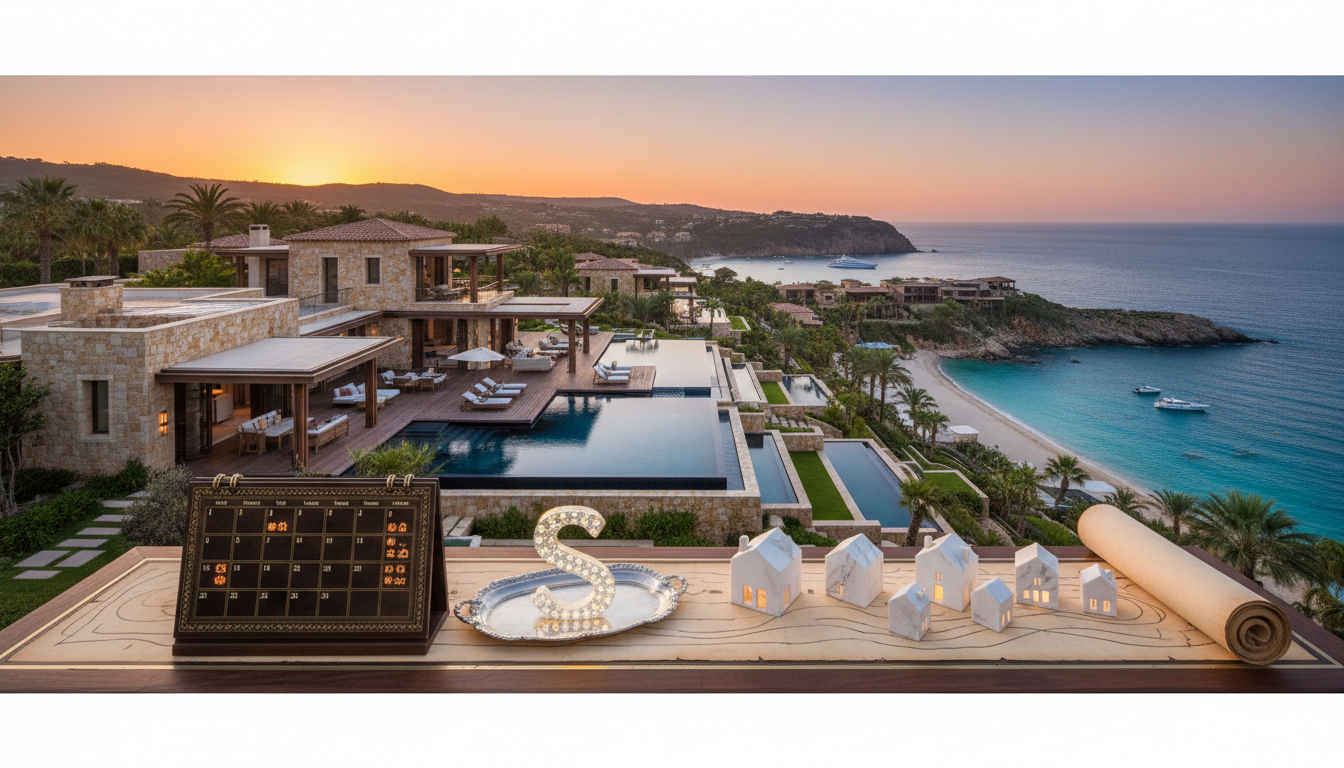
Two families, six couples, or a wedding party of twenty: the question lands on the table almost immediately. Do we split hotel rooms, or do we take one house? The answer has changed in the last few years. Purpose-built group villas now compete seriously with the best suite-heavy resorts, and the differences show up long before anyone checks in.
This guide walks through how a private villa rental actually compares with a luxury hotel for a group — space, staff, cost structure, privacy, and the small logistics that decide whether a trip feels effortless or fragmented — so you can book the option that genuinely fits your group.
Space: one roof versus a corridor of doors
The first distinction is structural. A hotel gives each room its own door, its own HVAC, and its own wall between you and the next traveler. A villa gives the group a shared living room, a kitchen that fits four people cooking at once, a pool that nobody else has a claim on, and outdoor space that runs from breakfast to midnight without a lobby in between.
For multigenerational families, that difference is decisive: grandparents sleep in a ground-floor suite, the kids get their own wing, and everyone gathers in one place in the evening. For groups traveling for a celebration — a milestone birthday, a bachelorette weekend, a reunion — the villa becomes the venue rather than the place you return to between venues.
Cost: how the math actually works
Hotels price per room, per night. Add resort fees, parking, breakfast, and the third room someone always needs, and a group of eight can quietly spend more than it would on a single large property. Villas price per property, per night, and the number splits across the group.
The honest caveat: a villa is not automatically cheaper. A full-service estate with a private chef and daily housekeeping sits in the same tier as a five-star resort. What changes is the shape of the spend — one transparent booking instead of eight room folios, fewer line items for meals out because breakfast and many dinners happen at the house, and no resort fee attached to amenities the group was never going to use. Run the real total for your dates, not the headline nightly rate.
Service: what you get, and from whom
Hotels have an army: concierge desk, bell staff, room service, spa, multiple restaurants. Villas have a smaller, closer team — a host or property manager who knows the house, housekeeping on a schedule you set, and, where the property offers it, a private chef and pre-arrival provisioning.
The trade-off is scale versus intimacy. A hotel can rebook a spa appointment at midnight; a villa team plans your week in advance with you. Groups that want a curated itinerary — airport transfers, a chef for the anniversary dinner, a boat day arranged for twelve — tend to prefer the villa model, because one person coordinates all of it instead of the group texting a concierge thread.
Privacy and the shared-wall problem
In a hotel, your group shares elevators, pools, and restaurant noise with strangers. In a villa, the pool gate locks. For public figures, for anyone celebrating something personal, and honestly for any group that simply wants to walk to the kitchen in pajamas, this is often the deciding factor.
Privacy also cuts the other way: villas sit in residential neighborhoods or gated communities, not in a walkable hotel district. If the trip is built around nightlife, a central hotel may serve you better. If the trip is built around the group itself, the villa wins.
Logistics: the details that decide it
- Arrival and departure: hotels handle luggage the moment you arrive; villas typically have a check-in window and a host who walks you through the house. Worth confirming before you book.
- Meals: hotels feed a group on demand; villas feed a group through provisioning and pre-planned chef nights. Large groups often do both — one dinner out, the rest at the house.
- Children: villas give kids a safe, enclosed space and a real bedtime routine. Hotels give you kids' clubs. Depending on ages, one clearly beats the other.
- Location: the hotel is near everything; the villa is near the beach, the golf, or the view. Decide which proximity matters for this trip.
- Minimum stays: peak-season villas often require five to seven nights, which suits a true vacation and not a two-day city stop.
So which should your group book?
Choose the hotel when the trip is city-based, short, and built around going out — when you want a front desk at all hours and zero setup. Choose the villa when the trip is longer, when the group is large enough that room counts start compounding, when children or older parents are traveling, or when the house itself is the reason you're going.
Most groups that try both end up with the same verdict: the villa felt like the group had somewhere to belong, rather than a series of reservations to keep. If that sounds like your trip, start with The Maruca Group — we screen every property, match it to your group's size and dates, and handle the details that make a house run smoothly from the first morning to the last night. You can also browse our luxury villas in Miami, Hawaii villa rentals, or Palm Springs villas to see what a group property looks like in your destination.
Is a villa cheaper than a hotel for a large group?
Often, once you total rooms, fees, and meals — but not always. Full-service villas price in the same range as five-star resorts. Compare the complete trip total for your dates rather than the nightly headline.
How many people do you need to make a villa worth it?
Groups of six to eight are usually the tipping point, since three or four hotel rooms plus fees approach a single large property's cost. Below that, a hotel suite can still make sense.
Do villas have staff like hotels do?
Villas include a property host or manager and scheduled housekeeping; private chefs, pre-arrival provisioning, and daily service can be arranged on many properties. What you won't have is a 24-hour front desk and room service on demand.
Can we book a villa for just a weekend?
Some properties allow two- or three-night stays in the off season; peak weeks often require five to seven nights. Minimum stays are confirmed before you commit to anything.
How do we know a villa is safe and as advertised?
That is exactly what a vetted booking process is for: every property is screened and verified before it reaches you, with clear photos, real capacity, and a named contact — rather than an open-market listing you have to vet yourself.